
10 Tips for Maintaining a Safe Warehouse
Written by Staff Writer | Edited by Michael Purser
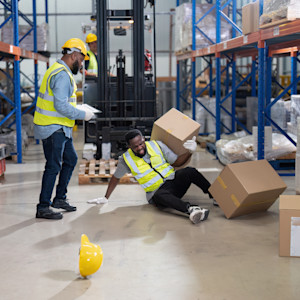
A modern warehouse is a complex environment that combines 21st-century technology with a traditional human workforce. While these storehouses must run efficiently, worker safety is, and always should be, the number-one consideration.
When workers are safe, productivity rises and costly disruptions are minimized. Conversely, when caution takes a backseat, operations may face regulatory violations, operational delays and catastrophic injuries.
Understanding the Risks
Workers in these facilities are at a higher risk of suffering a serious workplace injury. Warehousing sees 4.7 injuries per 100 workers compared to the national average of 2.7 injuries per 100 laborers for all private industries, according to the U.S. Bureau of Labor Statistics.
Moreover, an audit by the Office of the Inspector General covering the years between 2016 and 2021 found that, despite the marked increase in the number of warehouses throughout the U.S. and the fact that the overall injury and illness rates in these facilities were consistently high, the number of inspections OSHA conducted during the time in question decreased by 10 percent, leading to a greater exposure to harm.
Try these 10 warehouse safety tips to prevent injuries and maximize efficiency.
Warehouse Industry Safety Tips
- Always Wear Personal Protective Equipment: With numerous moving parts, heavy machines and heavy cargo, a warehouse environment is an inherently dangerous workplace. One of the most effective ways to reduce the risk of injury is to ensure the proper use of appropriate personal protective equipment (PPE). Gloves, safety glasses, safety shoes, high-visibility vests and hearing protection are common examples of appropriate PPE for the everyday hazards found inside the average warehouse. Employers must provide the proper PPE to workers and ensure they receive adequate training on the use of each device.
- Keep Pathways Clear of Obstructions: Cluttered aisles are surprisingly deadly. They reduce visibility, impede movement and increase the likelihood of trip hazards. Good housekeeping includes maintaining pathways free of debris, discarded packing materials and product overflow. Proper storage of products in designated areas, rather than improvised spaces, prevents the accumulation of creeping piles of refuse that might endanger drivers and pedestrians alike. Proper lighting is important throughout a warehouse to allow for effective work conditions and navigational clarity in the workplace. Emergency exits should be clearly marked and kept clear of all materials.
- Ensure Proper Training: Only trained personnel are permitted to enter the workfloor. That includes an appropriate initial education as well as specialized supplemental training as needed for specific tasks or equipment. A workforce that understands the importance of occupational safety and knows how to correctly utilize equipment is less likely to suffer injuries, accidents and disruptions. Effective training must go beyond basic onboarding for operators of machinery such as forklifts, pallet jacks, conveyors and lifting equipment. Emergency preparedness should also be a standard part of the training curriculum, including training on evacuation routes, fire suppression methods and basic first aid.
- Always Use Proper Lifting Techniques: Approximately two in every five workplace musculoskeletal problems are back injuries. Most of those incidents occur during a lifting task. Improper lifting can cause immediate injury, while repetitive lifting can strain the body and lead to persistent damage over time. OSHA stresses the importance of considering four stages when lifting heavy objects: preparation, lifting, carrying and setting down. Following guidelines for safe material handling in the workplace can drastically reduce injuries in a warehouse workplace.
- Communicate Effectively: An effective communication system not only keeps everything running smoothly on a day-to-day basis, but it is also critical when something goes wrong. Frontline personnel must be able to alert supervisors to potential hazards and respond rapidly during an emergency. Depending on the size and scope of the operation, effective coordination may require radios, intercoms and/or digital communication tools. Clearly defined reporting procedures are equally crucial to quickly moving information throughout the facility.
- Abide by Forklift Safety Rules: Most warehouses rely on forklifts or other powered industrial trucks (PITs) to move products around the facility. OSHA mandates that all PIT operators be properly trained and certified before sitting in the cab. Drivers and non-operators alike must pay attention at all times to avoid collisions. Pedestrians can never assume that the forklift driver is aware of their presence and must exercise extra caution when working in the fall zone, the full circle around the forklift equal to twice the height of the carried load. Moreover, personnel should never walk under raised forks, even when they are empty. Forks both obscure operator vision and could fall without warning.
- Carefully Navigate Aisles and Pathways: When navigating, only walk on designated pedestrian pathways and stop at the end of every aisle. Before proceeding into the main PIT lane, look in both directions to avoid colliding with a forklift or other machinery. Similarly, lift operators must remain within marked travel paths and effectively use signals, horns, lights or other communication devices at all intersections.
- Maintain Safety Precautions Around Conveyor Belts: Conveyor belt accidents cause about 9,000 injuries and 40 deaths each year in the U.S., according to the Bureau of Labor Statistics. To prevent a conveyor belt injury, never lean or sit on conveyor belts, regardless of whether they are moving or not. When working near a conveyor belt, keep your hair above your shoulders and avoid wearing loose clothing that could become entangled in the conveyor rollers.
- Use Care When Stacking Items: The primary purpose of any warehouse is to store products or materials. That often necessitates rows upon rows of shelves, usually stacked to the ceiling with items. To decrease the likelihood of a serious injury, stack heavy items on the bottom and lighter items on the top when arranging products. If you need to reach products that are stacked higher than your head, use a forklift or a ladder to reach the items.
- Prepare for Emergencies: While the goal should always be to eliminate hazards in the workplace, a wise (and compliant) employer will anticipate and prepare for events such as fires, chemical spills, medical incidents and natural disasters. Emergency response plans, including evacuation procedures, should be distributed in writing to all employees and reinforced through regular practice drills. Fire extinguishers, eye washing stations, spill kits and first aid supplies must be accessible, functional and routinely inspected.
What Is the 5S Methodology in Warehousing?
Designers and regulators all around the world continue to build better approaches to warehousing issues. The 5S methodology is one such system. The concept originated in Japan, but has since become a universal system for creating cleaner, safer and more efficient workplaces. Here’s an overview of the five principles and the original Japanese words that represent them:
- Sort (Seiri): Remove anything unnecessary, broken or no longer used from the work area.
- Set in Order (Seiton): Place the remaining items in a logical order with a designated spot for everything.
- Shine (Seiso): Inspect and clean the entire workspace on a regular basis. Not only does this reduce potential dangers, but it also helps identify problems in a timely manner.
- Standardize (Seiketsu): Establish consistent routines, processes and procedures that all workers follow.
- Sustain (Shitsuke): This step requires consistent reinforcement of the previous principles and an ongoing commitment to avoid returning to a disorganized, potentially dangerous, working environment.
While 5S represents one management framework, it certainly isn’t the only way to organize a storage workflow or promote a safety culture.
Putting It Together
Every workplace is unique. Whether your facility is designed to store appliances, ship shoes or process raw materials for a furniture factory, the challenges you face on the job are as individual as your business needs.
Start by identifying your current needs. Review injury reports, conduct a walkthrough or listen to employee feedback. Then you can formulate a coherent plan to address your situation — whether that calls for you to train workers, review current ergonomic designs, order new fire extinguishers or just reinforce warehouse cleanliness rules.
As you implement your strategy, remember to review our course catalog for hundreds of user-friendly, online-only employee training programs designed for workers in warehouses and many other industries — including OSHA-authorized Outreach Training courses for general industry.