
Struck-by Rolling Objects: Definition, Risks and Safety Measures
Written by Staff Writer
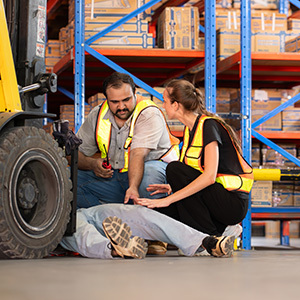
What can be surprising to many is that a rolling object does not always look dramatic. It might be a pipe that starts to creep on a slight grade, a pallet jack that gets away from someone or a loader that turns into a blind spot you cannot see. The impact can be life-changing even if the physical hazard doesn’t immediately look dangerous.
When safety teams talk about struck-by incidents, “rolling objects” is one of the categories that often gets skipped because it feels obvious. It is not obvious, and smart crews keep this danger type in mind.
Hazards can hide inside normal work, especially when crews are moving materials fast, working around traffic or staging loads on uneven ground.
What “Struck-By” Means in OSHA Terms
How is a struck-by rolling object defined? In training materials by the Occupational Safety and Health Administration (OSHA), struck-by injuries are described as injuries produced by forcible contact or impact between a person and an object or piece of equipment. That definition matters because it sets the boundary between struck-by and other incident types.
OSHA also notes that struck-by hazards can resemble caught-in or caught-between hazards, and the difference often comes down to one question: Was it the impact alone that caused the injury, or was the injury mainly from crushing between objects?
Types of Struck-By Hazards
OSHA groups struck-by hazards into four types:
- Flying objects
- Falling objects
- Swinging objects
- Rolling objects
Rolling object hazards happen at ground level. The object moves across a surface and strikes a worker. Think of it this way:
- A falling object comes from above
- Flying objects move through the air
- Swinging follows a pivot
- A rolling object travels along the ground
So, what counts as a rolling object? It’s anything heavy that can move. Common examples include:
- Vehicles and mobile equipment
- Forklifts, pallet jacks loaders
- Pipes, coils, drums cylinders
- Materials that roll under gravity or force
If it can gain momentum, it belongs in this list. Can you think of any others?
Four Common Object Incident Scenarios
Most rolling object incidents and struck-by accidents are not about one huge mistake. They are about normal work plus one missing layer of control.
Here are scenarios that show up across construction, manufacturing and general industry:
1. Stored Materials on a Slope
Pipe or rebar shifts slightly. Gravity does the rest.
2. Unstable Loads on Pallet Jacks
A load shifts. The jack rolls into a walkway.
3. Temporary Vertical Storage
A drum or coil stands for only a moment, then tips and rolls.
4. Congested Equipment Movement
Equipment moves through tight spaces. A blind spot hides a worker.
Now ask the obvious question. Which of these could happen at your worksite? Unfortunately, for many sites, the answer is more than one.
Practical Prevention Steps
Strong controls are usually simple, but they must be consistent. Most sites need a mix of planning, physical controls and traffic discipline.
Start with these prevention steps:
- Control the grade by leveling staging areas or choosing a different drop zone when the surface is sloped.
- Use chocks, cradles, racks or cribbing to prevent pipes, cylinders and round stock from moving.
- Build an exclusion zone around mobile equipment, then enforce it with spotters and clear walk paths.
- Separate people and equipment with barriers when possible, not just cones.
- Require controlled-speed movement for carts, pallet jacks and material handling equipment in shared areas.
After controls are set, supervisors can add a short check before break and before shift end. After all, gravity does not care that the crew is tired.
The Role of Personal Protective Equipment
Appropriate personal protective equipment (PPE) matters, but it should never be the only plan. PPE helps reduce injury severity when something slips through. Sometimes, things do slip through, and that is reality.
Common PPE for Workplace Hazards
When there is a risk of rolling or falling objects, crews usually rely on:
- Hard hats
- Safety-toe footwear
- High-visibility clothing
- Safety glasses
- Task-specific hand protection
The key is fit and purpose. PPE should match the hazard, not guess at it. A brief overview of how PPE works on construction sites can clear up confusion about what is required and when.
When a site needs documented training for PPE selection and use, a focused option is the personal protective equipment certificate course. It is a clean way to build consistency across a workforce that has mixed experience levels.
Training that Supports Workplace Safety Measures
Rolling object incidents are rarely caused by one worker not paying attention. They are usually caused by a system that did not make the safe choice.
That is where training earns its keep. A solid foundation course helps workers recognize struck-by hazards, understand how controls fit together and speak up when a staging plan is unsafe. Implementing safety measures is crucial to preventing serious injuries.
For construction teams, many employers start with OSHA Outreach training because it creates shared language across the crew. OSHA Education Center offers OSHA-authorized Outreach training through the University of South Florida, including:
Specialized Courses for Additional Prevention
Some jobsites face risks that change by the hour. Think ramps, open edges or tight access routes around moving equipment.
Fall hazards and rolling objects often show up together in these spaces. That overlap is where workplace injuries happen.
Targeted Safety Programs for Real Conditions
When a site needs more than general awareness, specialized training helps. OSHA Education Center offers options that support smarter planning and hazard control, including:
- Fall prevention training for early hazard recognition
- Fall protection certificate course focused on controls and systems
- An intro to construction safety certificate course for new workers
These courses help crews think ahead. Where do people walk? Where do materials land? What could shift mid-task?
Next Steps for a Protected Jobsite
Want fewer close calls and less downtime? Start with a strong training base.
Then add targeted courses that reflect the work your crews actually do. That is how safety moves from theory to habit. Begin today and create a safer work environment for everyone.