
Understanding the Differences Between Hard Hats
Written by Staff Writer
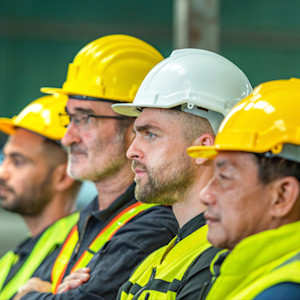
Hard hats are some of the most familiar pieces of safety gear on any jobsite, and for good reason. Construction site hazards can be unpredictable, and proper protection can mean the difference between a minor and major injury. But not all hard hats are created equal. If the wrong type is used, it can leave the wearer exposed to the exact risks they thought were covered.
Whether you work in construction, manage a crew or oversee safety rules, you need to know what separates one hard hat from another. In this guide, we will cover the difference between class and type, what each provides and how to choose the best hard hat for your jobsite.
Impact Protection Types
Depending on the jobsite, hazards can strike from above, the side or multiple directions. There are two types of hard hats, each providing different directional impact protection. The two types are defined in ANSI/ISEA Z89.1.
Type I
These are tested for impact resistance from above only. When a tool drops from scaffolding or debris falls from overhead, a Type I helmet is designed to absorb and distribute that force away from the wearer’s skull.
Most traditional cap-style and full-brim hard hats used in U.S. construction fall into this category. They commonly use a four-point or six-point suspension system that maintains a small clearance between the shell and the head. When an object strikes the helmet from above, the force is absorbed by the suspension instead of the skull.
This style is best suited for:
- General construction with mostly overhead hazards.
- Work under scaffolding, hoists or lifting operations.
- Highway, bridge and infrastructure projects.
- Industrial sites with low side-impact risk.
The classic cap-style Type I hard hat is often seen on builders, ironworkers and equipment operators across the country. These offer solid protection against vertical impacts at an affordable price point.
Type II
This type is designed to withstand both top and lateral impacts. They are used in environments where workers may be struck from multiple angles.
These designs often include added side protection through foam, built-in liners or advanced suspension systems. Safety helmet models incorporate chin strap systems that keep the helmet in place during impact, falls or sudden movements.
This style is most often used in:
- Demolition and deconstruction
- Manufacturing areas with moving machinery
- Utility work, tower climbing and elevated tasks
- Mining, logging and tree work
Some Type II helmets also support accessory mounts for attachments like face shields, earmuffs and headlamps.
Electrical Protection Classes
Class rating is used to measure safety against electrical hazards. OSHA requires appropriate head protection when electrical hazards exist under 29 CFR 1910.135 and 1926.100.
Keep in mind: Type refers to impact, while class covers electrical protection. That means a hard hat can be Type I or Type II and Class G, E or C.
Class G (General)
Class G provides dielectric protection up to 2,200 volts. It is the most common choice for construction and general industrial work where low-voltage exposure may exist, but direct contact is not expected. This includes:
- Residential and commercial construction
- Road and bridge work
- Manufacturing and industrial facilities
- Mining and equipment operation
For crews who need dependable head protection on typical jobsites when low-voltage hazards may be present, Class G is often the right choice.
Class E (Electrical)
Class E provides the highest dielectric protection, tested to resist up to 20,000 volts. It is intended for people who work around high-voltage systems above 2,200 volts, such as utility lines and electrical rail systems.
Class E hard hats use non-conductive materials and are often non-vented. Although it may be tempting, the shell should not be drilled or modified, as this would affect voltage resistance.
Because this protection applies to the head only, these should be used in conjunction with other personal protective equipment (PPE) in an electrical safety program to provide an ideal level of overall protection against electrocution.
Class C (Conductive)
Class C provides no electrical insulation. These hard hats often include vents and may use conductive components. They should only be used where electrical hazards are absent or completely controlled, such as:
- Warehousing and distribution.
- Metal fabrication areas without electrical exposure.
- Non-electrical manufacturing environments.
- Roadwork away from overhead lines and temporary power.
- General applications with no electrical exposure.
Comfort can drive people toward Class C, but ventilation is a poor trade-off if electrical hazards are present.
Common Shell Materials and Styles
Material affects weight, durability, heat resistance and cost, while style affects coverage and accessory compatibility.
Shell Materials
- HDPE (high-density polyethylene) is common for entry-level and mid-range models. It is lightweight, durable and can handle everyday impacts and jobsite wear.
- Fiberglass and composite shells perform better in high-heat environments where higher temperatures can shorten the service life of some plastics.
Shell Styles
- Cap style uses a short front brim only, like a baseball cap. Many are reversible in case the wearer needs greater forward visibility.
- Full brim provides sun and weather coverage around the entire head and helps shed rain away from the face.
Your choice should balance weight and heat resistance with the coverage the job requires.
How to Choose the Right Hard Hat for the Job
To make the best choice for your workplace, identify hazards, match type and class, then confirm fit and compatibility. While comfort and style matter, they should come after protection requirements are met.
1. Identify Impact Risks
Start with the direction and nature of likely impacts:
- If you are only worried about falling objects, go with Type I.
- Where moving equipment, low clearances, demolition work or climbing are part of the job, pick Type II.
A standard construction site might seem like the ideal Type I environment, but frequent work in lifts, around piping racks or in congested mechanical rooms can move the risk profile toward flung debris and lateral impacts. Choosing too much protection is better than selecting too little.
2. Evaluate Electrical Exposure
Next, review electrical conditions:
- Class G, at minimum, is needed if the site includes temporary power, overhead lines, panels, generators or energized equipment.
- Class E is best for working in environments like data centers, assembly lines and other places where high-voltage equipment is operating above 2,200 volts.
- Class C should only be used in environments where electrical hazards are absent or fully controlled.
This decision should reflect the highest level of on-site exposure. If electrical work happens on the same site, or if overhead utilities cross the work zone, hard hat selection should account for those conditions.
3. Consider Job Conditions
Environmental factors can influence material choice and comfort:
- High heat, radiant exposure and hot work may call for materials designed for those conditions.
- Outdoor work may benefit from full brim coverage.
- Cold conditions may require liners and hoods, which can affect suspension sizing.
Where extra markings are included, beyond type and class, those markings should line up with the job requirements and the manufacturer’s guidance.
4. Confirm Compatibility with Other PPE
Head protection must work with any other PPE the job requires, including:
- Hearing protection
- Face shields
- Respirators
- Welding hoods
- Headlamps
- Fall protection systems
Compatibility with any accessories should be tested before use. A face shield mount that forces the shell to sit too high can ruin fit. Earmuffs can interfere with certain brim shapes. Respirator straps can push a helmet upward if the sizing for either device is wrong.
These issues are usually obvious during a short trial. It is easier and cheaper to solve problems before purchasing or using an inappropriate combination in bulk on an active jobsite.
5. Validate Fit, Stability and Wear Habits
Even the right type and class will not help if the helmet does not stay on correctly during use. A fit check should confirm:
- The shell sits level on the head, not tilted back or forward.
- The suspension is snug but not tight enough to cause headaches or pressure points.
- The helmet stays stable when bending, climbing and looking up.
- Any retention systems stay secure and don’t become loose with normal movement.
Comfort still matters because it affects proper use. Crews who experience poor fit or excessive heat often remove helmets, loosen suspensions or wear gear incorrectly, which impairs functionality.
Stay Safe on Every Job
When choosing a hard hat, the goal isn’t to own the fanciest headgear on site. Instead, it’s to make sure the chosen helmet protects against everyday risks, fits comfortably and is compatible with everything else the worker must wear to stay safe. When these three factors line up, the selected model can protect the wearer without becoming a daily annoyance.
If you need a quick way to train your team and document compliance, enroll in the OSHA Education Center’s 1-hour PPE for Construction course. You will learn how to assess hazards, choose the right PPE, use it correctly and understand OSHA requirements. Sign up today to strengthen your safety program and support a safer jobsite.