
Navigating OSHA’s Respiratory Protection Rules
Written by Staff Writer | Edited by Michael Purser
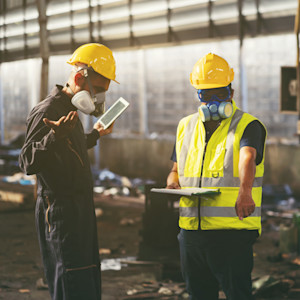
Harmful airborne contaminants are extremely common in construction and industrial environments. That’s why employers are required by law to adhere to the Occupational Safety and Health Administration (OSHA) Respiratory Protection Standard (RPS). Failure to use the right personal protective equipment (PPE) in hazardous environments puts workers’ health and safety at risk of serious illness — or even death.
Understanding the general requirements for respiratory protection doesn’t have to be hard. You just need a little training and practice to take care of yourself and others. Read on to learn the basics of current legal standards and how to educate yourself on safe workplace practices.
Understanding OSHA’s Respiratory Protection Standard
Countless chemicals and materials can cause lung damage, cancer or other adverse health effects. The respiratory safety standards enforced by regulators protect workers against exposure to noxious gases, dusts, vapors and biological pathogens.
Fortunately, regulations don’t require you to memorize each individual contaminant. A broad, basic understanding of major risks prepares you to identify potential hazards and take the necessary precautions to protect yourself. That typically means wearing the right PPE.
Legal Requirements for Respiratory Protection Equipment
Federal law regulates a huge range of safety standards for workplace hazards, including fall risks, electrocution hazards and, of course, airborne hazards. The standard for respiratory protection is found in 29 CFR 1910.134. The RPS defines an expansive array of rules designed to prevent serious harm to workers.
Hazard assessment and engineering controls are key requirements of 29 CFR 1910.134. Employers must first try to implement feasible engineering controls, such as ventilation and enclosure, to minimize exposure. If such controls are not feasible, or not sufficient to make the workspace safe, then employers must provide masks, respirators or other appropriate devices to employees.
According to the administration, the standard “requires the use of respirators to protect employees from breathing contaminated and/or oxygen-deficient air when effective engineering controls are not feasible, or while they are being instituted.”
While OSHA doesn’t approve individual equipment, suitable respirators should be NIOSH-certified and specifically designed to address the hazard. Employers must train workers to identify potential hazards, select an appropriate respirator and use the provided equipment correctly. Medical evaluation may be required to assess whether workers are capable of safely using a respirator as part of their job duties.
Employers must maintain a written program that covers expected hazards and outlines a training regimen for the proper use and maintenance of respiratory equipment. A designated competent person should oversee the program.
OSHA defines a competent person according to criteria found in 29 CFR 1926.32(f). Essentially, a designated individual should have the skills, authority and experience to effectively identify, control and correct specific hazards in the workplace.
Specific Respiratory Hazards Everyone Should Know
Construction and industrial work can expose you to a variety of airborne hazards. Some of these include:
Dust
Dust is a bit of a catch-all term that describes airborne particles you don’t want inside your lungs. Dust, in one form or another, is extremely common in construction. It can be caused by demolition, sanding, cutting and grinding. Whether it’s concrete, drywall, dirt, wood, stone, tile, glass or another material, you shouldn’t be breathing it in.
Respiratory Crystalline Silica (RCS)
This particulate is especially injurious. Granules are much smaller than sand and can cause severe damage deep inside the tissue of the lungs. It can come from concrete, cement, mortar, bricks and sandstone. Activities like cutting and grinding can pulverize silicates and cause them to become airborne.
Over time, RCS can cause silicosis, lung cancer and chronic obstructive pulmonary disease (COPD).
Asbestos Fibers
You have likely heard that breathing in asbestos fibers can cause serious health problems, including mesothelioma. Regulators stopped allowing builders to use asbestos decades ago, but it’s still found in many older buildings and building materials. When you are on a job at an old building site, you could wind up breathing in these fibers.
Inhalation can lead to asbestosis, mesothelioma and lung cancer — often decades after the initial inhalation.
And More
These are only some of the common airborne dangers. Fumes, gases, volatile organic compounds (VOCs) and other contaminants can all lead to injury or death in the right circumstances. That’s why knowing the dangers in your workplace, adhering to safe workplace standards and wearing your PPE is so important.
Possible Consequences for Standards Violations
To ensure employers follow regulatory guidelines, there are serious consequences for violating standards. Some of these include:
- Financial Penalties. Violations can result in fines that increase as the violations become more severe.
- Legal Liability. Employers can face lawsuits, work stoppages and citations if they continue to violate regulatory standards
- Reputation Damage: Repeated violations can erode trust and damage business relationships. Losing valuable contracts and skilled employees can drive employers out of business even without expensive fines.
Get the Education You Need to Ensure Compliance
Adhering to safety regulations is just common sense. Fortunately, it’s never been easier to get proper training to promote safe workplace practices — both for respiratory health and other federal standards.
At OSHA Education Center, we offer convenient, fully online courses that provide a firm foundation for employees and employers. Our online Respiratory Protection course teaches you how to protect yourself and your employees against airborne contaminants in the workplace. This course is for any employee or manager in a workplace that must comply with the standard.
Topics covered in the course include:
- Respiratory basics and disposable masks
- Air-purifying respirators and filter types
- Atmosphere-supplying respirators, including SARs and SCBAs
- Fit testing a respirator
- Wearing a respirator
- Maintaining a respirator
You will learn how to identify dangers and choose proper protection for each. You can enroll and start learning today. Or browse our extensive course catalog for additional training options for your team.